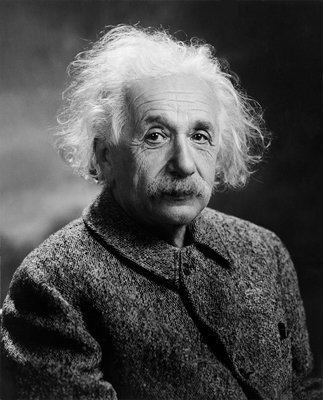
Show your appreciation for Albert Einstein. Recorded directly on the public ledger.
Sign in required to give Hearts
The Saga of Albert Einstein
3 min read
Category
Scientists & Inventors
Era / Tenure
14 March 1879 – 18 April 1955
Leaderboard Rank
#1 in Scientists & Inventors
Verified Hearts
49,800 Hearts
ORIGINS & FORMATIVE YEARS
Roots, Upbringing & Early Influences
Albert Einstein was born on 14 March 1879 in Ulm, in the Kingdom of Württemberg in the German Empire, into an Ashkenazi Jewish family. His father Hermann Einstein was an engineer and salesman, and his mother Pauline Koch was a pianist. In early childhood, Einstein was unusually quiet and slow to speak, leading his parents to worry about his developmental progress. He developed an obsession with the unseen physical world at age five when his father gave him a pocket magnetic compass, wondering what invisible force compelled the needle to turn.
THE STRUGGLE & HARDSHIPS
Facing Adversity, Rejections & The Grind
Einstein deeply despised the authoritarian, rote-learning Prussian school system, clashing with headmasters who told him he would never amount to anything. After graduating from the Federal Polytechnic School in Zurich in 1900, he spent two agonizing years unemployed and broke, rejected for every academic teaching and assistant post he applied for. Desperate for an income to marry his classmate Mileva Marić, he took a humble job as an assistant examiner, third class, at the Swiss Federal Patent Office in Bern, reviewing electrical patent applications eight hours a day.
Key Milestone & Career Defining Moment
He developed an obsession with the unseen physical world at age five when his father gave him a pocket magnetic compass, wondering what invisible force compelled the needle to turn.
— Official Historical Record & Archive
MAJOR BREAKTHROUGH & WORKS
Landmark Works & Career Breakthrough
In 1905, working in his spare time at his patent desk without university research funding or supercomputers, Einstein published four revolutionary papers in the Annalen der Physik that changed the universe forever—an era known as his Annus Mirabilis (Miracle Year). These papers explained the photoelectric effect (proving light consists of discrete quanta), Brownian motion (proving atoms exist), special relativity (overturning Newtonian concepts of space and time), and mass-energy equivalence (E = mc²). In 1915, he completed General Relativity, describing gravity not as an invisible pull, but as the geometric warping of spacetime by mass.
SUPREME SUCCESS & LEGACY
Global Stature, Accolades & Enduring Legacy
When Sir Arthur Eddington's 1919 solar eclipse expedition proved that starlight bent around the sun exactly as Einstein predicted, global headlines proclaimed: 'Lights All Askew in the Heavens; Men of Science More or Less Agog'. Awarded the 1921 Nobel Prize in Physics, Einstein was forced to flee Nazi Germany in 1933 due to antisemitic persecution, finding refuge at the Institute for Advanced Study in Princeton. A passionate pacifist, civil rights activist, and humanist, Albert Einstein's name remains the universal synonym for supreme human genius.
Inspired by Albert Einstein's Journey?
Join thousands of supporters and give your Heart to rank Albert Einstein higher on the public ledger.